Tuesday, February 19, 2008

A PhD outside the 'tour d'ivoire'

Hmmm...I started this blog almost two years ago now, for the most part, to chronicle in hindsight my years in graduate school and perhaps, in the process of doing so, map out 'new adventures', be in the academe or outside the ivory tower.
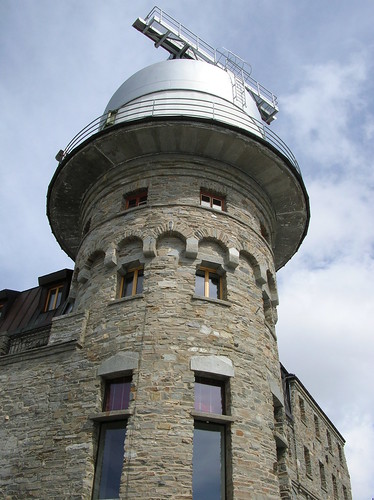
Gornergrat

Two years hence, I'm a PhD outside the academe and is in the industry practice. Statistically, I belong that two thirds of contemporary PhDs who have not secured an academic job and is in the practice profession albeit the same discipline.

Why am I not in the academe? There are a variety of reasons but foremost would have to be simply my failure to get an academic job is because there just aren't enough jobs in academia. ScienceWoman provided a list of reasons why PhDs leave the halls of the academe. Another reason that is particularly applicable to me is the lack of good mentorship in how to attain an academic job. This is not to say I did not receive good supervision during my candidature. I was fortunate to have two supervisors who are considered authorities in my field of research and were very supportive. More than mentors, they have become life-long friends. But I did not receive appropriate advise on how to prepare for or get an academic job.

Although I am not presented with the same challenges in my current job. I cannot say that I do not like it. But as ScienceGeek would have it, there is that internal struggle of having a PhD and not be an academic. ScienceGeek contends that "this is mostly due to the expectation that a PhD will follow that well laid out route of PhD, post-doc, academic faculty and that anything less is consider somewhat of a failure."

Nevertheless, I consider my PhD as successful and a significant achievement. I don't regret doing a PhD and I still consider it as one of the best choices I ever made.

Labels: , , ,

Wednesday, January 23, 2008

"What you read today ...

In an earlier post, I mentioned that having the luxury of time to read books is one of life's pleasures. Much as I long for my own iLiad by iRex, the e-Book reader now available through Dymocks in Australia at a whopping retail price of AU$899, I am still of the view that much pleasure can be derived from the tactile experience of turning pages while nose deep reading a book.

Recently, in one of my regular lunchbreak visits to a couple of second-hand / antiquarian bookshops, I stumbled upon a 1953 hardcover copy of Marston Bates' Where Winter Never Comes. Joy! I finally got my own copy.

But why do we keep books? Gary Lines suggests that books are a silent summary of one's personality, intellect, interests and most likely a reflection of influences. Gary Lines contends that books are a person's cheaper curriculum vitae as they don't have to be new.


Anyhow, Where Winter Never Comes (1953) is one of the seminal books that supported the notion that the beginnings of civilization were achieved in the tropical regions. Bates opposed the extreme positions of the environmental determinists regarding the tropical climate as quite hopeless for civilization. Bates argues that most of the human evolution took place in the tropics.

Having made a somewhat thorough literature review on Environmental Determinism as part of my PhD research, I came across numerous works on the subject and have voraciously read books by late 19th century and early 20th century modern geographers. The university library was just an amazing repository of these interesting literature.

I am now on a quest to track down and secure copies of my own of the following:
Civilization and Climate (1915) by E. Huntington
Environment and Race: A Study of the Evolution, Migration, Settlement and Status of the Races of Man (1927) by G.T. Taylor
Climate and the Energy of Nations (1944) by S.F. Markham
Climate Makes the Man (1944) by C.A. Mills

Labels: , , , ,

Saturday, January 19, 2008

Magnum Opus

In Australia, the magic number in doing a PhD is 3 1/2 years which is the time frame for completion. At the end of this period the objective is for a PhD candidate to complete a thesis that is rigorous and original: "a well-written thesis [that] reveals independence of thought and approach, a deep knowledge of the research topic and has made a significant original contribution to knowledge consistent with 3-4 years of full time research".

The thesis, more often than not, is perceived as a candidate's 'life's work'. It is that work that would practically consume postgrads during their candidature as their thesis is regarded as the definitive outcome. However, I agree with Caroline Hamilton that the thesis should be intended as a gate way rather than an endpoint. I am of the view that more than the end product and the consequent nominals after one's name, the process provides that fertile ground to develop high order skills and deep understanding - "undertaking the PhD develops a habit of mind that is able to synthesise ideas, understands concepts and communicated logically" (Kevin Donnelly's, In pursuit of a dinosaur).

As Garry of Sydney (Pressure on PhDs to meet the grade) would have it: Qualifications give you a start, you still have to perform.

Labels: , , ,

Wednesday, December 19, 2007

Two years ...

Today, two years ago was graduation day. Just thinking about it, still puts a smile in my face and tingle down my spine.

Pretty heady, Doc.

Labels: ,

Sunday, October 07, 2007

The Pursuit of a PhD

Two more provocative articles on the value of the PhD have recently appeared in the Higher Education section of The Australian:

Richard Nile referred to the PhD as a dinosaur from a previous age of elite education. Nevertheless, Kevin Donnelly responded that it is a valuable anachronism. Donnelly further commented that with "much of education [being] consumed by the tyranny of revelance and measured by its utilitarian value, an added advantage to undertaking a PhD is that it is primarily an intellectual exercise that may not have any practical application or worth."

But is the PhD really obsolete and the degree not worth the 4 or so years of rigorous intellectual work? Should one look at this pinnacle of university study and its pursuit as a waste of time not to mention expense?

At the moment, I belong that two thirds of contemporary PhDs who have not secured an academic job and is in a practice profession where having the qualification is seen as "elitist and not to be promoted" (Althea Enid Silk & Colleen E. Whythes, The Academy). But I do not believe that my not having an academic job means that my PhD is a failure. I agree with one of the comments to Nile's post that intellectual and professional benefits can be reaped from a doctoral education even when there is no "direct fit" between the field of research and one's later career path. One other comment suggested that perhaps the PhD is outmoded but there is just no better method of getting research training and that this training is not often recognised and valued.

Certainly, the PhD education has likewise provided me with those "generic capabilities" which I think renders that prestige even outside academia. I still think that I am one of the lucky few who had the opportunity and the privilege to pursue a PhD. As Laurie Johnson suggests, "a side issue that is easily overlooked in the current climate is the idea that doctoral qualifications provide brilliant people with an opportunity to make a genuine contribution to furthering knowledge within a field of specialisation. This is a part of the argument that should never be allowed to drift too far into obscurity..."

I liked how Ian of London summed it all up: "It’s called the pursuit of knowledge because it is the pursuit, not the knowledge, that counts; and ultimately, at a national level, it is the pursuit that pays. As for PhD students themselves, those lucky few who stay in the academy or related areas will ‘get’ a secure low professional wage. So the reason to undertake a PhD is not to make money: it is simply an apprenticeship in a life-long process of disciplined learning. That is the privilege it gains you."

Ian further qualifies:
"A PhD is about practising disciplined reading (meaning both that you need to make yourself read unappetising books in a library for hours every day for years and that you focus your interests within particular communities of scholarship); about working intensely with primary materials (be they manuscripts, historic government records, numbers, etc.); about learning to synthesise and reference that reading/experimentation/field-work in a formal manner that stands up to traditional forms of scrutiny (conference papers, articles,monographs; all anonymously peer reviewed); about bending, breaking, and/or revolutionising those rules within the same forums; about learning to develop with an un-matched level of intensity over an extended period one’s own ideas in the context of other people’s ideas. All up the PhD (a doctorate of philosophy) is all about practising, practising, and practising again, how to read (life) and how to write(about it). I don’t think those skills are outdated, or by any means unbeneficial to society generally, but no one should pretend they are lucrative. So the other key skill a PhD demands students practise and develop is the delineation, budgeting, and justification of a research project."

Now, one should feel ever so lucky to include this as part of one's life experiences.

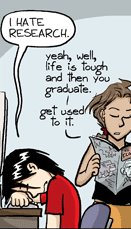
*comic strip from Piled Higher and Deeper, 8 June 2005

Labels: , ,

Sunday, September 02, 2007

After two years ...

On this day two years ago, I received that much awaited phonecall
from one of my supervisors about the results of my thesis assessment. Two years after, I am still buoyed up by the thought-provoking comments I received from the two external examiners.

What have I done so far after 'sort-of' leaving the halls of the academe and choosing to work outside the ivory tower? The first year out was devoted to producing conference papers (produced three for major conferences in my field). I also devoted majority of 2006 working for the School - organising an international conference where I also was a referee. I have yet to have an output this second year. I must admit though that I miss having to do research work. I long for work with more intellectual content and one that allows both research and execution.

Last week, an article in the Higher Education section of The Australian made reference to the the reforms being considered by elite universities in training PhDs. Naturally, this incited comments on the quality of the Australian PhD. The issue of a PhD's employability was also raised.

I consider my PhD as successful. Yet, I now work in the industry sector (though still within my PhD discipline area) that considers my qualification as not relevant to its requirements. I like to think however, that I have been able to express and convince my employers that my performance and work output to date which they value is largely due to the tranferable skills acquired through my academic research training.

I agree with James of London who commented that "Prospective and
current PhD candidates should see the reality of a PhD for what it is. PhD candidates should realise that a PhD is academic research training. This degree prepares you for a career as an academic. A PhD is
[also] a very individual affair, the outcome of which is totally determined by how the candidate responds to the factors that impact their study."

It goes without saying that having a PhD is a significant achievement and society generally views it as such. But as with everything else, it is up to the PhD to make it work - whether within the academe or in the industry sector. For me, at the end of the day, it is a skill - though a commendable skill and one should be proud to have acquired (achieved) the qualification.

Labels: , ,

Wednesday, July 04, 2007

Two years hence ...


Two years ago on this day, I finished and submitted my thesis for assessment. Autumn of 2005 was the most stressful ever. But in hindsight, the most rewarding.


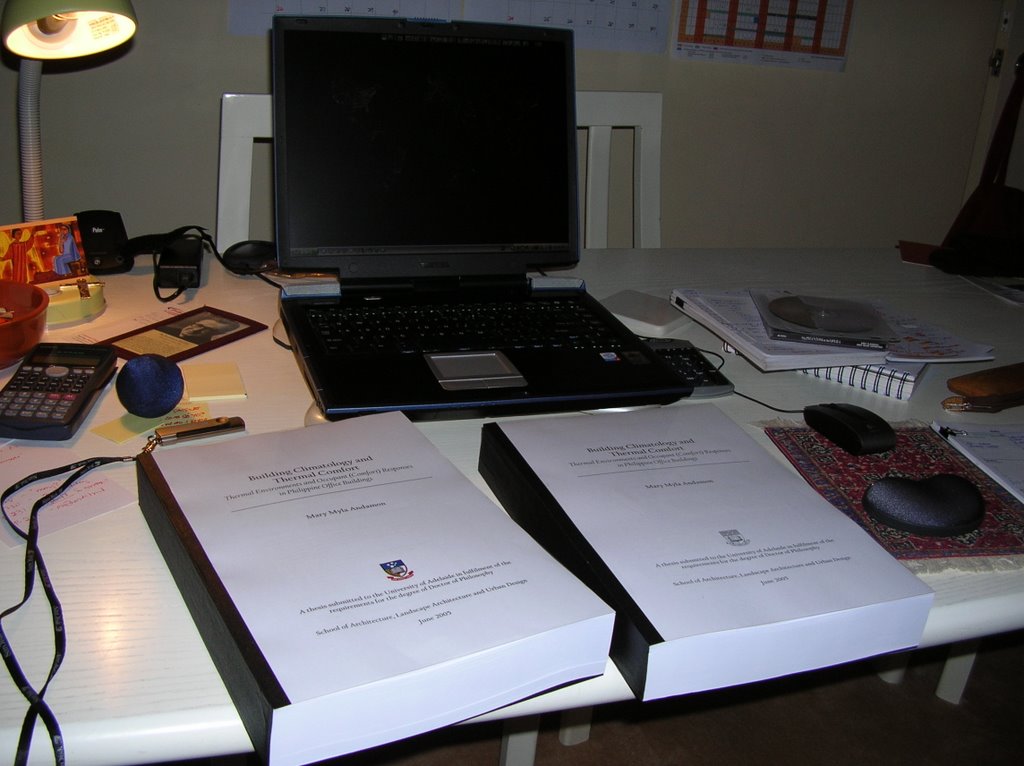
Organised chaos - how my workspace (dining table) in the flat looked then when I was in the thick of things. It was wonderful!

Labels: , ,

Tuesday, December 19, 2006

Per aspera ad astra

"through the thorns of struggle to the stars on high"

A year ago today (19 December), I became a PhD.

Graduation finally came. It was the (most) exhilarating and pleasurable culmination of the seemingly endless research journey to finish the dissertation, having my supervisors review it for the 'go-ahead-submit-it', hand it in for external examination and get it accepted to be awarded the degree for a piece of original research (applause, applause).

As Stewgad indicated, being in graduate school is both ego-building and utterly emotionally shattering. But having weathered this so-called 'limbo of academia', I'd like to think that I got through it unscathed (albeit a social pariah?). It has only been 12 months since I left* the academe, but the years spent as a research postgrad have been the most fulfilling. I actually reveled in doing research. I took delight in doing the hard work it invariably demanded. I was the best me I know doing academic research. It certainly was character building. They say (this, I really and truly believe) that you don't need to be a genius to earn a PhD (although it doesn't hurt). I am smart but have never thought that I am an outstanding or exceptional student. What I have going for me are: the great capacity to learn as well as, perhaps, not afraid of hard work.

I believe that nobody finishes a dissertation without discipline, determination, grit, tenacity and fortitude. GUMPTION!

Summing up the experience, I say earning the Ph.D. is "Pretty Heady, Doggone".

*this is another story which merits another blog entry

Labels: , ,

Sunday, October 01, 2006

"Don't Try"...

...reads Charles Bukowski's (1920-1994) epitaph.
"If you spend all your time trying, then all you're doing is trying. So don't try. Just do."

Recently, a friend who's working on his dissertation sent this philosophical poem, "Roll the Dice" from What Matters Most Is How Well You Walk Through the Fire by Charles Bukowski . Very much like the poet himself, a postgrad's spirit of perseverance and faith in self can be summed up by this poem.

Roll the Dice
if you’re going to try, go all the way.
otherwise, don’t even start.
if you’re going to try, go all the way.
this could mean losing girlfriends, wives, relatives, jobs
and maybe your mind.
go all the way.
it could mean not eating for 3 or 4 days.
it could mean freezing on a park bench.
it could mean jail,
it could mean derision,
mockery,
isolation.

isolation is the gift,
all the others are a test of your endurance,
of how much you really want to do it.
and you’ll do it despite rejection and the worst odds
and it will be better than anything else you can imagine.
if you’re going to try,
go all the way.
there is no other feeling like that.
you will be alone with the gods
and the nights will flame with fire.
do it, do it,
do it.
all the way,
all the way.
you will ride life straight to perfect laughter,
it's the only good fight there is.

Labels: , ,

Sunday, September 03, 2006

The year after ...

This weekend last year (2 September 2005), I received the outcome of the thesis examination. The two external examiners - a professor at Oxford Brookes' School of Architecture (UK) and an associate professor at the Department of Architecture, University of Oregon (US), both recommended the award of the degree of Doctor of Philosphy subject to minor amendments.

Nine weeks after submission, SHEER NIRVANA!

Even after a year, it is still hard to describe the feeling in finally getting THE validation for the almost four years of hard postgraduate research work from two renowed researchers in the field of thermal comfort:

Examiner 1 (UK): "There is no doubt in my mind that this thesis displays original and critical thought...has shown original approach to comfort data...undertaken a very thorough review of the literature review...has generally demonstrated a good critical understanding of the works she has read. Following a good review of the literature, the student has gained a good understanding of the disciplines within which it falls. The range of disciplines is wide and this student has taken them as such demonstrating a basic understanding of the physics/physiology approach as well as the behavioural and, particularly, the sociological approach placing air conditioning in its historical and sociological setting."

Examiner 2 (US): "It was a pleasure to review [this thesis]. The work is very well-written, understood, researched, and encompasses a large area of work in the tropical context where little is known...it is an important contribution to the thermal comfort field." On the assessment if the thesis has been clearly, accurately and cogently written and suitably illustrated and documented: "...this is the strongest part of the thesis. It's beautifully executed."

Labels: , ,

Tuesday, July 04, 2006

A Year Ago Today ...


On this day, last year I handed in my thesis to the Graduate Centre for external examination - four years and eleven months after going back to the university, entering graduate school and commencing research work.

That so-called "pathway to many abilities [a number] consider as un-natural" was a life-changing journey. I wouldn't have it any other way.

Labels: , ,

Wednesday, June 07, 2006

Cold Summer, Jasmine Green Tea and Sleep Deprivation


If I am asked how to describe those crucial summer months of 2005, I'd come up with 'cold summer', 'lots of jasmine green tea' and 'sleep deprived'. My dissertation was on thermal comfort, yet I always felt cold during those summer months. It was hard to feel comfortable when anxiety sets in. I took comfort in several cups of jasmine green tea day in and day out. Sleep deprivation was very much a given. On this, I knew I wasn't an exception - I got by with just 4-5 hours sleep and would only give myself an extra hour or two on Saturdays. Until this day, I am still amazed that I got through it all.

During the 'home run' months of the dissertation, I found myself working more at home than at the university.

Labels: , ,

Monday, April 17, 2006

At the crux

The Summer of 2004-2005 was the starting point of the final stretch of putting together and writing my thesis on thermal comfort. The initial months of the season was riddled with major decisions. One of which is deciding to change accommodation just when I am at the crucial stage of my candidature. After staying at the residential college for three and a half years, I decided to move to a flat and live on my own.

Early November, I found a nice and cozy one-bedroom fully furnished flat two blocks away from the college and within one week secured the place but would only be able to move in mid-December. The timing was just perfect as I was preoccupied with the preparations for a paper presentation in Launceston, Tasmania.

Labels: , ,

Beginning of Summer 2004-2005

The lush green leaves of the grape vine that adorned the facade of this bottle shop near the residential college where I stayed somehow aptly depicted the start of the final stages of my thesis writing.

Labels: , , ,

Spring 2004

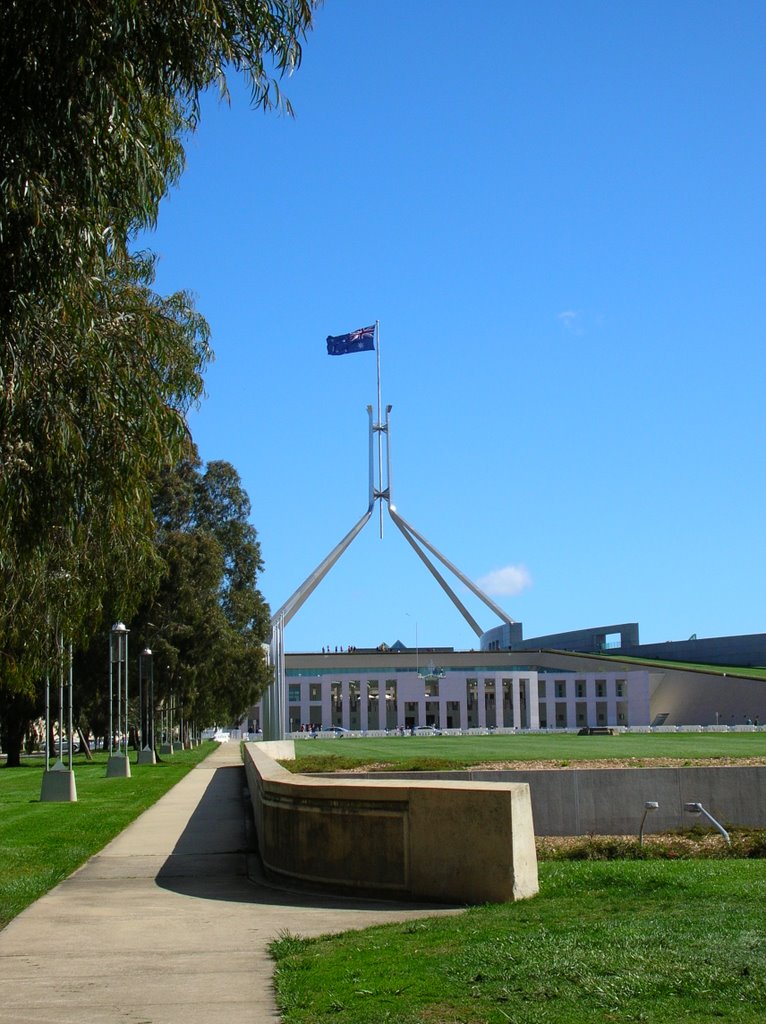
Before embarking on my so-called 'home run', I, with a department colleague also working on her PhD but in Landscape Architecture, decided to take advantage of Virgin Blue flight sales and make a little trip to Canberra for a weekend. I figured with my argument not anymore swimming in its primordial soup, I owed myself some holiday trips.

This season of beginnings was filled with 'holidays' and fun events. I guess it was sympathizing with the euphoric state I was in for thinking that I have finally 'figured out' my argument?

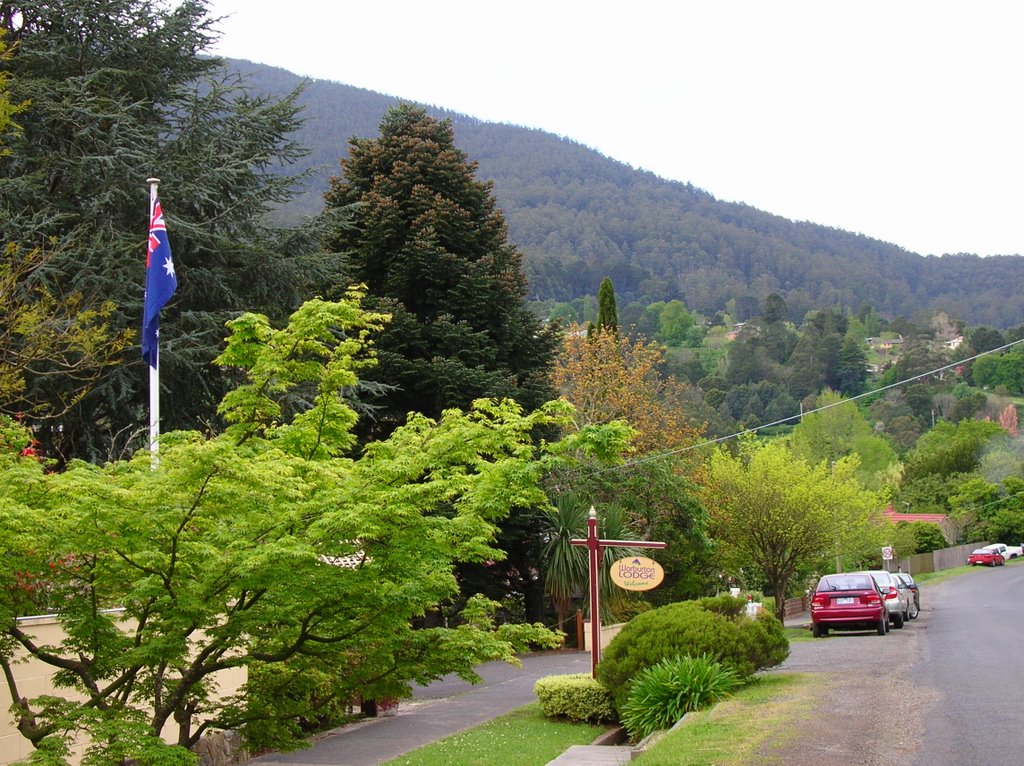
Next trip the following weekend was to Warburton, Victoria (an hour's drive from Melbourne) for my three day-spiritual retreat.

Labels: , , ,

Monday, March 13, 2006

A Researcher's Prayer


Grant, oh God, thy benedictions
On my theory’s predictions
Lest the facts, when verified,
Show thy servant to have lied.

May they make me BSc,
A PhD and then
A DSc and FRS,
A Times Obit. Amen.


Oh, Lord, I pray, forgive me please,
My unsuccessful syntheses,
Thou know’st, of course – in thy position –
I’m up against such competition.

Let not the hardened editor,
With referee to quote,
Cut all my explanation out
And print it as a note.

-Proceedings of the Chemical Society, January 1963, pp 8-10
(Quoted in A Random Walk in Science, an anthology published by the Institute of Physics in 1973)
* comic strip from Piled Higher and Deeper, 28 January 2005

Labels: , , ,

Fiat lux et facta est lux


My thesis (argument) only took shape in July 2004 - three years after I started the research and having worked on two field experiments. The primordial soup of ideas for the argument itself took three months to take shape in my head. I was forced to put them down in a structured form only because I was scheduled to do a seminar presentation to the school that month of July. In hindsight, that very much dreaded seminar was a blessing in disguise. Yet, I still mulled over the argument outline for about a couple of months and only started REALly writing the thesis (dissertation) after that. This meant that the final writing stage of my dissertation was from October 2004 to May 2005. Those eight 'home run' months were the most stressful ever of the whole duration of the PhD work.
* comic strip from Piled Higher and Deeper, 17 May 2000

Labels: , ,

Sunday, March 05, 2006

In retrospect...

This web log was inspired by the blogs of two graduate students (Stewgad and Zelda). Going over the chronicles of their 'struggles' to finish their PhDs gave me a somewhat uncanny feeling. Having chosen to go to graduate school myself, I have gone through a similar path that I can clearly identify with their experiences. This blog will be the chronicle of my own struggles in retrospect.

I have recently just been awarded the PhD, graduated in December 2005, having completed the thesis in October 2005. I would like to provide an accounting of how and why choosing to do work towards getting THE degree was one of the best choices I ever made.

It has only been a little over a year ago that I began to write my dissertation...

Labels: , ,